

If you’re unsure whether the correct spelling is Writing or Writting, the answer is simple: writing is correct.
Writting is a misspelling.
The confusion is understandable. English has words such as sitting, running, and stopping, where the final consonant is doubled before -ing. That can make writing look right at first.
But write follows a different spelling pattern:
write → writing
The final silent e is removed before -ing is added. The t stays as a single letter.
Once you understand that pattern, this common spelling question becomes much easier.
Writing or Writting: The Correct Spelling
Writing is the correct spelling.
Writting is incorrect.
Compare these examples:
| Spelling | Correct? | Example |
| writing | ✅ Yes | She is writing an email. |
| writting | ❌ No | She is writting an email. |
You should use writing in school assignments, emails, articles, messages, and other forms of written communication.
For example:
- I am writing a report.
- She enjoys writing stories.
- He is writing a letter.
- They are writing notes during the meeting.
The correct form always has one t.
Why Is “Writing” Spelled With One T?
The easiest way to understand the spelling is to start with the base verb write.
When -ing is added to write, the final silent e is removed:
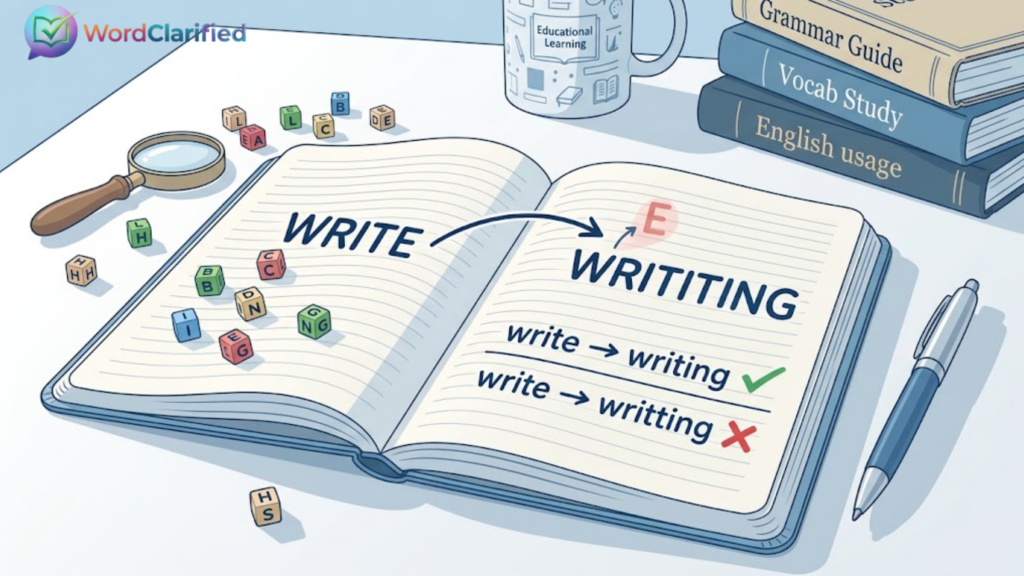
write + ing → writing
The t is not doubled.
You can see the same spelling pattern in other verbs:
- make → making
- hope → hoping
- drive → driving
- smile → smiling
- take → taking
So the same change applies to write:
write → writing
This is why writting is not the correct form.
Why Does “Writting” Look Correct?
The main source of confusion is probably the spelling pattern found in words such as sitting and running.
Some verbs double the final consonant when you add -ing:
- sit → sitting
- run → running
- stop → stopping
- cut → cutting
If you’re familiar with these words, you might naturally think:
write → writting
But write doesn’t follow that pattern. Its final e is removed instead.
Compare:
- write → writing
- make → making
- sit → sitting
- run → running
This is why knowing the base word helps. When you start with write, the correct form is much easier to see.
See Also: Long Term or Long-Term: A Complete Guide to Getting the Hyphen Right
Writing in Everyday Sentences
Writing can appear in many situations. You might use it when talking about schoolwork, work documents, emails, stories, or personal notes.
Here are some examples:
I’m writing an email to my teacher.
She is writing a short story.
He spends an hour writing every morning.
We were writing notes during the meeting.
They are writing a report for the project.
In every example, the spelling is writing, not writting.
If you spot writting in a sentence, it should be changed to writing.
What Does “Writing” Mean?
Writing can refer to the act of producing written words. It can also refer to written work or someone’s style of writing. Cambridge Dictionary and Merriam-Webster both list these uses for the word.
For example:
She is writing a letter.
Here, writing describes an action.
Now look at:
Her writing is easy to understand.
Here, writing refers to her written work or style.
You can also use it to talk about the activity itself:
Writing takes practice.
So you may see writing used in different ways, but the spelling stays the same.
Write, Wrote, Written, or Writing?
The different forms of write can cause another type of confusion.
| Form | Example |
| write | I write every day. |
| wrote | I wrote a letter yesterday. |
| written | I have written three emails. |
| writing | I am writing an email now. |
Write is the base form:
I write in my notebook every night.
Wrote is the past-tense form:
She wrote the message yesterday.
Written is the past participle:
He has written several articles.
Writing is the -ing form:
They are writing a new article.
One useful detail to remember is that written has two t letters, while writing has one. The spelling of one form does not determine the spelling of another.
What About “Writeing”?
There is another spelling mistake worth knowing: writeing.
That spelling keeps the final e when it should be removed.
These are the three forms:
- writing ✅
- writting ❌Does British or American English Use a Different Spelling?
- writeing ❌
The correct change is:There is no separate British or American spelling such as writting
or writeing. If you’re writing for readers in either variety of English,
writing is the correct form.
write → writing
Not:
write → writting
And not:
write → writeing
If you are unsure, go back to the base verb. Remove the final e, then add -ing.
See Also: Of Course or Ofcourse: The Correct Way to Write It
More Examples: Words That Drop the Final E
The same pattern appears in other verbs that end with a silent e.
| Base verb | -ing form |
| make | making |
| hope | hoping |
| use | using |
| ride | riding |
| save | saving |
| smile | smiling |
| write | writing |
These examples can help you recognize the pattern instead of memorizing writing on its own.
Compare that with verbs that double a final consonant:
| Base verb | -ing form |
| sit | sitting |
| run | running |
| stop | stopping |
| cut | cutting |
The important point is that not every verb follows the same spelling change. That’s why write becomes writing, not writting.
A Simple Way to Remember the Spelling
If you often type writting, use this quick check.
Start with:
write
Remove the final e:
writ
Then add -ing:
writing
The result has one t.
You can use this same rule with words like:
- hope → hoping
- make → making
- drive → driving
When you remember the base word, the correct spelling is easier to work out.
Does British or American English Use a Different Spelling?
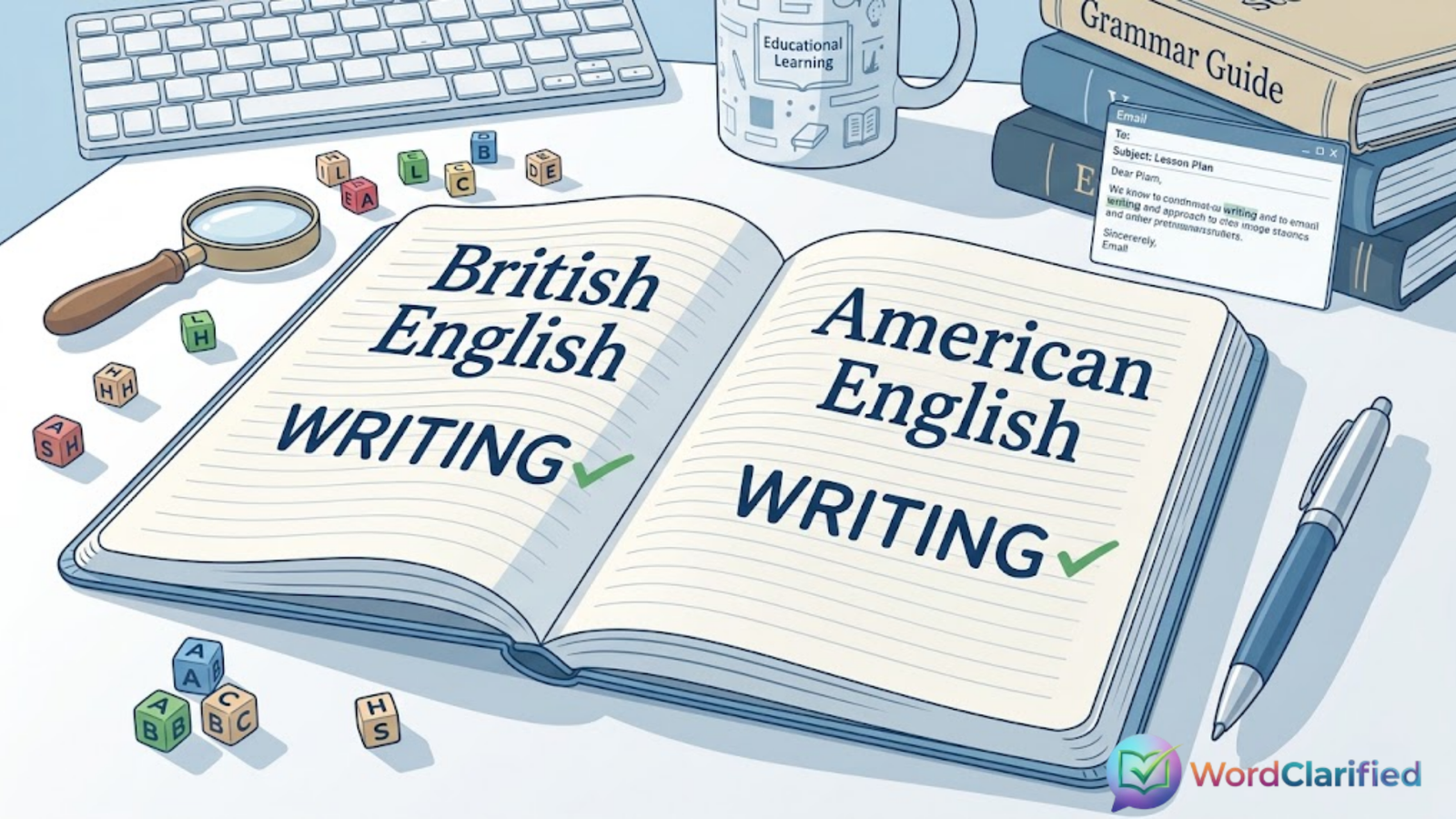
No. Writing is spelled the same way in British and American English.
There is no separate British or American spelling such as writting or writeing. If you’re writing for readers in either variety of English, writing is the correct form.
Why Correct Spelling Matters
A spelling mistake such as writting usually doesn’t prevent a reader from understanding your meaning. Most people will recognize the intended word.
Still, correct spelling matters in situations where your writing needs to look polished, such as school assignments, job applications, professional emails, and published articles.
More importantly, learning the pattern is better than relying on spell-check every time.
If you remember write → writing, you can recognize the correct form whenever you use the word.
Writing or Writting: Quick Answer
If you’re still wondering which one to use, remember this:
Writing ✅
Writting ❌
The correct form comes from:
write → writing
Remove the final silent e and add -ing. Do not double the t.
For example:
I am writing an email.
She enjoys writing stories.
He is writing a report.
Once you connect the word to write, the spelling becomes much easier to remember.
FAQs
1. Is “writing” or “writting” correct?
Writing is correct. Writting is a misspelling. The correct form is made from write by removing the final silent e before adding -ing.
2. Why doesn’t “write” become “writting”?
Write follows a different spelling pattern from words such as sit and run. When -ing is added, the final silent e is removed, giving writing.
3. Is “writting” a word?
Writting is an incorrect spelling of writing. When you mean the act or work of putting words into written form, use writing.
4. What is the difference between “writing” and “written”?
Writing is the -ing form of write:
She is writing a letter.
Written is the past participle:
She has written a letter.
5. How can I remember the spelling of “writing”?
Start with the base word write. Remove the final e and add -ing:
write → writing
The t is not doubled.

[…] See Also: Writing or Writting: Which Spelling Is Correct? […]