
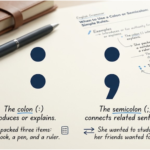
When to Use a Colon or Semicolon Choosing between a colon and semicolon is much simpler when you know the job each mark performs.A colon (:) directs attention to what comes next, including a list, explanation, example, or quotation.A semicolon (;) connects two complete, related thoughts. It can also divide list items when those items already contain commas.For example:Colon: … [Read more...] about When to Use a Colon or Semicolon: Simple Rules
Grammar
Past Tense of Panic: What Is the Correct Form?
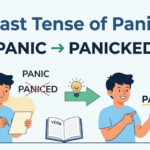
The past tense of panic is panicked. I panicked when I couldn't find my wallet. The spelling can be confusing because panic becomes panicked, not paniced. The word also uses panicked as its past participle, while panicking is its present participle. What Is the Past Tense of Panic? The past tense is: panic → panicked Use panicked when the reaction happened in … [Read more...] about Past Tense of Panic: What Is the Correct Form?