
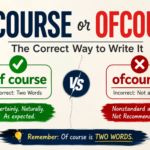
If you have ever been unsure whether to write Of Course or Ofcourse, you are not alone. Both forms look similar, so it is easy to see why people get confused. However, there is a clear answer in standard English: of course is the correct form. It is written as two separate words. Ofcourse is not the standard spelling of this expression. You may still see it in text messages, … [Read more...] about Of Course or Ofcourse: The Correct Way to Write It
Skillset or Skill Set: What’s the Difference?

If you’ve seen both skill set and skillset, you may wonder whether one is a spelling mistake. The answer isn’t simply that one is right and the other is wrong. Skill set is the main form used by Oxford and Merriam-Webster. Cambridge also recognizes skillset as an alternative form, so it isn’t accurate to call the one-word version incorrect. If you’re choosing the … [Read more...] about Skillset or Skill Set: What’s the Difference?
Past Tense of Panic: What Is the Correct Form?
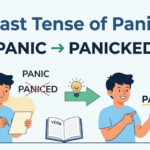
The past tense of panic is panicked. I panicked when I couldn't find my wallet. The spelling can be confusing because panic becomes panicked, not paniced. The word also uses panicked as its past participle, while panicking is its present participle. What Is the Past Tense of Panic? The past tense is: panic → panicked Use panicked when the reaction happened in … [Read more...] about Past Tense of Panic: What Is the Correct Form?
Long Term or Long-Term: A Complete Guide to Getting the Hyphen Right

Introduction Both long term and long-term are correct — the right choice depends on how the phrase is functioning in your sentence. The hyphen isn’t optional decoration; it signals grammatical role. When the phrase describes a noun, it becomes long-term (a compound adjective). When it refers to a stretch of time on its own, it stays long term (a noun phrase). You may also … [Read more...] about Long Term or Long-Term: A Complete Guide to Getting the Hyphen Right