

In academic writing, “the author states” can introduce information taken from a source. It introduces an idea, fact, or opinion from a source. Repeating the same phrase too often can make your writing sound less natural. A more specific reporting verb can clarify your meaning.
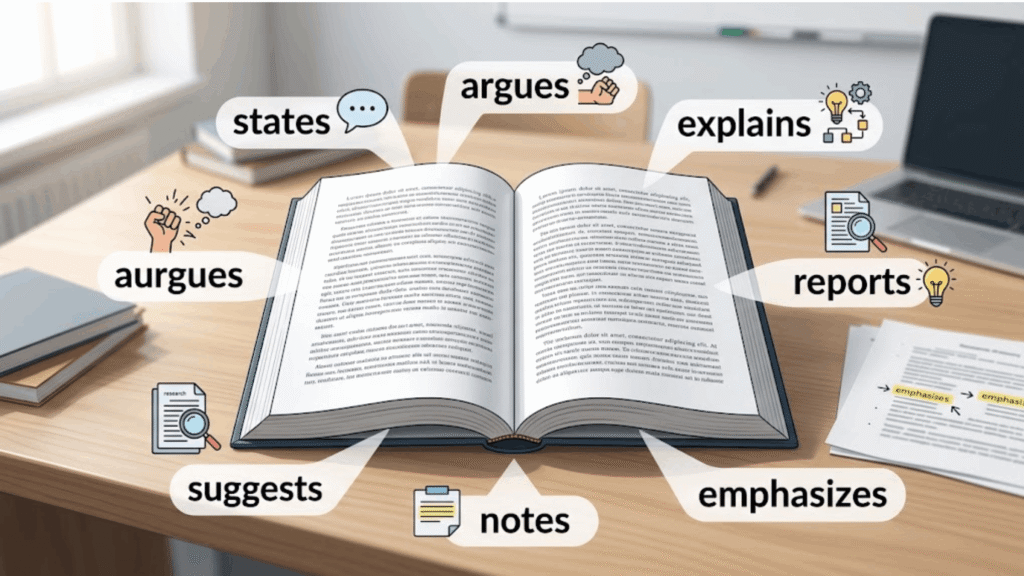
For example, argues fits a reasoned position, while explains fits an explanation. Notes works well for a particular detail, while emphasizes fits a point the writer wants to highlight.
The right alternative depends on what the author is doing in the text. The options below cover essays, research papers, literary analysis, and other formal writing.
What Does “The Author States” Mean?
“The author states” means that a writer clearly gives information, an opinion, or a claim in a text. States is a reporting verb that tells readers what the author has written without adding much interpretation.
For example:
- The author states that regular exercise can improve sleep.
- The author states that the policy affects small businesses.
- The author states that the character feels disconnected from the people around him.
The phrase works well when you want to report an author’s words or position neutrally. It does not automatically mean that the author is arguing, proving, or strongly defending an idea.
If the writer gives reasons for a position, argues may be more accurate. If the writer clarifies an idea, explains may fit better. For a brief detail, notes can sound more natural.
The main point is simple: choose the reporting verb that matches the author’s purpose.
30+ Other Ways to Say “The Author States”
These alternatives do not all have the same meaning. Choose one based on what the author is doing in the source.
Neutral Alternatives
These verbs work when you want to report information without adding a strong interpretation.
1. The author says
Use says for a simple and direct reference to the author’s words or position.
Example: The author says that early education can shape a child’s future.
2. The author writes
Use “writes” when referring to the exact words the author uses in the text.
Example: The author writes that language changes as society changes.
3. The author notes
Use “notes” when the writer points to a specific detail in the text.
Example: The author notes that many students struggle with academic vocabulary.
4. The author mentions
Use mentions when the writer refers to something only briefly.
Example: The author mentions several causes of workplace stress.
5. The author observes
Use observes when the author makes an observation based on what they have seen, studied, or discussed.
Example: The author observes that younger readers often prefer digital content.
6. The author points out
Use “points out” when the writer draws attention to a specific fact or detail.
Example: The author points out that the results vary between the two groups.
When the Author Gives an Explanation
Use these verbs when the author makes a concept, process, reason, or relationship easier to understand.
7. The author explains
Use “explains” when the author makes an idea easier for the reader to understand.
Example: The author explains why some languages have more irregular verbs than others.
8. The author describes
Use describes when the author gives details about a person, place, process, event, or situation.
Example: The author describes the effects of prolonged screen use on students.
9. The author clarifies
Use “clarifies” when the author makes a confusing point easier to understand.
Example: The author clarifies how correlation differs from causation.
10. The author outlines
Use “outlines” when the author presents the main points or steps of a topic.
Example: The author outlines three steps for improving reading comprehension.
11. The author discusses
Use discusses when the author examines a topic or considers several aspects of it.
Example: The author discusses the challenges faced by first-generation college students.
When the Author Presents an Argument
Use these verbs when the author takes a position and supports it with reasoning or evidence.
12. The author argues
Use argues when the author presents a position supported by reasons or evidence.
Example: The author argues that public libraries should receive greater community funding.
Do not use argues for every statement an author makes. A simple fact does not automatically become an argument.
13. The author contends
Use contends when the author strongly maintains a particular position in a discussion or debate.
Example: The author contends that current testing methods fail to measure practical skills.
14. The author maintains
Use maintains when the author continues to support a particular position, especially when that position faces disagreement.
Example: The author maintains that stricter standards would improve the quality of online education.
15. The author asserts
Use asserts when the author presents something firmly or confidently as true.
Example: The author asserts that social conditions have a major effect on educational outcomes.
16. The author insists
Use insists when the author strongly emphasizes a position and does not appear willing to accept an opposing view.
Example: The author insists that the policy should apply equally to all applicants.
Because insists can sound forceful, use it only when the source supports that tone.
When the Author Presents an Idea or Possibility
These verbs are useful when the author introduces an interpretation, possibility, belief, or proposed course of action.
17. The author suggests
Use “suggests” when the author puts forward an idea without presenting it as certain.
Example: The author suggests that shorter lessons may improve student attention.
It can also refer to an idea that the author expresses indirectly.
18. The author proposes
Use proposes when the author puts forward an idea, explanation, method, or possible solution.
Example: The author proposes a new approach to teaching academic writing.
19. The author considers
Use considers when the author examines an idea or possibility rather than fully accepting it.
Example: The author considers several explanations for the decline in enrollment.
20. The author believes
Use believes when the text clearly presents the author’s personal or stated belief.
Example: The author believes that students learn more effectively through regular practice.
Use this carefully when the source presents evidence rather than a personal belief.
21. The author implies
Use implies when the author communicates an idea without stating it directly.
Example: The author implies that financial pressure may influence students’ career choices.
Do not use implies when the author clearly states the idea. A more direct reporting verb may be better.
When the Author Reports Information or Findings
These verbs work well for research papers, studies, surveys, reports, and other sources that present evidence or results.
22. The author reports
Use reports when the author gives information about research, events, observations, or findings.
Example: The author reports a significant increase in attendance after the program began.
23. The author indicates
Use indicates when the evidence or information points toward a particular conclusion.
Example: The author indicates that access to reliable internet remains uneven.
24. The author shows
Use shows when the source provides evidence that demonstrates a particular result or pattern.
Example: The author shows that students performed better after receiving additional practice.
Make sure the source actually provides evidence for the point you describe.
25. The author reveals
Use reveals when the source brings previously unknown, hidden, or less obvious information to light.
Example: The study reveals a large difference in reading habits between the two age groups.
This verb can sound stronger than reports, so use it when the source genuinely presents something newly discovered or previously unnoticed.
26. The author finds
Use finds mainly for a research result, or conclusion reached through investigation.
Example: The author finds that regular feedback improves students’ written accuracy.
For research writing, finds should normally refer to an actual finding rather than a general statement.
When the Author Gives Special Attention to a Point
These verbs show that the author gives particular importance to an idea or draws attention to it.
27. The author emphasizes
Use emphasizes when the author gives special importance to a particular point.
Example: The author emphasizes the need for clear communication between teachers and parents.
28. The author highlights
Use highlights when the author draws attention to an important feature, problem, result, or idea.
Example: The author highlights the growing gap between online access and digital skills.
29. The author stresses
Use stresses when the author strongly emphasizes a point.
Example: The author stresses the importance of checking sources before sharing information.
Like emphasizes, this verb suggests that the point receives special attention.
30. The author draws attention to
Use this phrase when the author deliberately directs the reader toward a particular fact, issue, or detail.
Example: The author draws attention to the lack of affordable housing in smaller cities.
31. The author acknowledges
Use acknowledges when the author recognizes a fact, limitation, opposing view, or point that affects the discussion.
Example: The author acknowledges that the study has a relatively small sample size.
The main lesson is simple: do not pick an alternative just because it sounds more academic. Choose the verb that accurately describes the author’s action.
See Also: 20 Best Synonyms of “Infectious Smile”
Choosing a Suitable Alternative to “The Author States”
The best alternative depends on what the author is doing in the text. Before replacing “the author states,” think about what the sentence means.
Reporting a Fact or Detail
Use notes, mentions, or reports when the author gives information.
Example: The author notes that many employees prefer flexible working hours.
Explaining a Topic
Use explains, clarifies, or outlines when the author helps readers understand a topic, process, or idea.
Example: The author explains how sleep affects memory and concentration.
Presenting an Argument
Use argues, contends, or maintains when the author takes a position and supports it with reasoning or evidence.
Example: The author argues that schools should give students more time for independent reading.
Expressing an Opinion or Idea
Use believes, suggests, or proposes when the author presents a belief, possibility, interpretation, or proposed solution.
Example: The author suggests that smaller classes may improve student participation.
Making a Strong Claim
Use asserts when the author makes a firm statement. Maintains can also fit when the author continues to defend a particular position.
Example: The author asserts that the existing system creates unnecessary barriers for applicants.
Emphasizing an Important Point
Use emphasizes, highlights, or stresses when the author gives special attention to an idea.
Example: The author emphasizes the need for accurate information in public health campaigns.
Reporting Research Findings
Use reports, finds, shows, or indicates when discussing evidence or results from research.
Example: The author reports that participants improved their scores after the training.
Describing Something
Use describes when the author gives details about a person, event, process, situation, or place.
Example: The author describes the challenges students faced during their first year of college.
A Simple Way to Choose
Think about what the author is doing in the sentence.
- Giving a fact or detail → notes or reports
- Explaining something → explains or clarifies
- Presenting a reasoned position → argues or contends
- Offering an idea or possibility → suggests
- Putting forward a solution → proposes
- Making a firm claim → asserts
- Giving special importance to a point → emphasizes or highlights
- Presenting research results → reports, finds, or indicates
- Giving details about something → describes
You do not have to change “the author states” in every sentence. If states accurately reports the source, it may be the clearest choice.
How to Avoid Repeating “The Author States”
Repeating “the author states” several times can make an essay sound predictable. You can make your writing smoother by changing the reporting verb, sentence structure, or source introduction.
Use the Author’s Name
You do not need to begin every sentence with “the author.” If the writer has already been introduced, use the author’s surname where appropriate.
Example: Martinez argues that early reading habits can influence later academic performance.
Use “According to the Author”
“According to the author” can work when you simply want to attribute information to the source.
Example: According to the author, regular feedback helps students identify weaknesses in their writing.
Use this structure when attribution matters more than describing exactly how the author presents the information.
Change the Sentence Structure
You can sometimes move the source to another part of the sentence instead of repeatedly using the same opening.
The author states that social media affects public discussion.
can become:
According to the author, social media affects public discussion.
You can also combine related points into one sentence when doing so keeps the meaning clear.
Keep Your Voice Separate From the Source
Make it clear which ideas belong to the author and which come from your own analysis.
For example:
The author argues that public transport needs greater investment. This argument suggests that current services may not meet the needs of growing communities.
The first sentence reports the source. The second gives your analysis.
Common Mistakes When Replacing “The Author States”
Replacing “the author states” can reduce repetition, but the new reporting verb must still match the source.
Using “Argues” for Every Opinion
An author can express an opinion without making an argument.
An argument usually involves a position supported by reasons, evidence, or logical explanation. A simple opinion may only tell readers what the author thinks.
For example:
The author believes that students need more time for creative activities.
This sentence reports a belief. It does not show that the author is defending the idea with supporting reasons.
If the author gives reasons for that position, argues may be appropriate:
The author argues that students need more time for creative activities because it can improve problem-solving skills.
Do not use argues for every opinion simply because it sounds formal.
Using “Claims” Without Considering Tone
Claims can introduce an assertion, but it may also create some distance between you and the author’s statement.
For example:
The author claims that the treatment is completely safe.
This wording can make the reader wonder whether the evidence fully supports the statement.
Compare it with:
The author states that the treatment is completely safe.
The second sentence sounds more neutral. If you have no reason to question the statement, states may be a better choice.
Choosing claims doesn’t mean the statement is false. Its effect depends on the context and the writer’s intended tone.
Using “Suggests” for a Direct Statement
Suggests usually presents an idea as a possibility, interpretation, or indirect meaning. It can make a statement sound less definite.
For example:
The author states that the program begins in September.
This reports a direct statement.
If the author presents September as a possible start date, you could write:
The author suggests that the program may begin in September.
The difference matters. States presents the information directly, while suggests leaves room for uncertainty or interpretation.
Changing the Author’s Meaning
The most serious mistake is changing what the source actually says.
Suppose an author writes that a new teaching method may improve student performance. Writing “the author states that the method improves performance” presents the claim with greater certainty.
Likewise, changing a neutral statement into “the author argues” may suggest that the author was defending a position when the source does not show that.
Before choosing a replacement, ask:
Does this verb accurately describe the author’s words, purpose, and level of certainty?
If yes, use it. If not, keep “the author states” or choose a more accurate reporting verb.
In academic writing, accuracy matters more than vocabulary variety.
See Also: 10 Best Ways to Say “I Hope You Are Doing Well”
Alternatives to “The Author States” for Essays
In an essay, the best alternative depends on the source’s role in your discussion.
For a neutral point:
The author notes that students often need more time to develop strong writing skills.
For an explanation:
The author explains why regular reading can improve vocabulary.
For an argument:
The author argues that schools should provide more support for independent learning.
For an idea or possibility:
The author suggests that shorter assignments may improve student engagement.
For a research finding:
The author reports that participants performed better after receiving regular feedback.
For an important point:
The author emphasizes the need for reliable evidence when evaluating online information.
According to Martinez, regular practice helps students become more confident writers.
The aim is not to use a different verb in every sentence. Choose wording that accurately represents the source and supports the point you are making.
Using “The Author States” Alternatives in Literary Analysis
Literary analysis often requires more than simply reporting what an author writes. Your reporting verb can show whether the author describes a character, develops an idea, draws attention to a theme, or communicates something indirectly.
Use describes when discussing details about characters, settings, or events.
The author describes the village as isolated from the surrounding communities.
Use observes when the author makes a noticeable observation about a character or situation.
The author observes the character’s growing sense of loneliness.
Use emphasizes when the text gives special attention to a theme or idea.
The author emphasizes the conflict between personal freedom and social expectations.
Use suggests when the author implies something instead of stating it directly.
The author suggests that the character’s silence reflects her fear of rejection.
Use explores when the author examines a theme, relationship, conflict, or broader idea throughout the work.
The author explores how family expectations influence the character’s decisions.
Use highlights when the text draws particular attention to an important feature or contrast.
The author highlights the contrast between the character’s public confidence and private doubts.
In literary analysis, take care when using verbs such as suggests and implies. They can indicate interpretation rather than a direct statement. Your wording should reflect the evidence found in the text.
Quick Guide to “The Author States” Alternatives
Choose the reporting verb that most accurately describes what the writer is doing:
- Notes → introduces a specific detail.
- Mentions → refers briefly to something.
- Explains → makes an idea or process clear.
- Clarifies → makes a confusing point easier to understand.
- Argues → presents a position with reasons or evidence.
- Contends → strongly maintains a position.
- Suggests → presents an idea or possibility.
- Proposes → puts forward an idea or solution.
- Claims → presents an assertion, sometimes with some distance from it.
- Asserts → makes a firm statement.
- Emphasizes → gives special importance to a point.
- Highlights → draws attention to an important point or detail.
- Reports → presents information or research results.
- Finds → gives a research finding or result.
- Indicates → points toward a conclusion or pattern.
- Observes → makes an observation.
- Describes → gives details about something.
- Outlines → presents the main points or stages of a topic.
- Acknowledges → recognizes a fact, limitation, opposing view, or relevant point.
These verbs are not interchangeable in every sentence. The right choice keeps the author’s meaning and accurately describes the source.
Frequently Asked Questions
What else can you say instead of “the author states”?
Possible choices include the author says, notes, explains, argues, suggests, claims, reports, emphasizes, and observes. Pick a verb based on what the writer is doing.
What are some alternatives to “the author states” in an essay?
Pick a reporting verb that matches the source. For example, argues fits a supported position, explains fits an explanation, suggests fits a possibility, and notes fits a particular detail.
Is “the author states” formal?
Yes. “The author states” sounds formal and professional. It suits academic essays, research papers, reports, and literary analysis. “The author says” is less formal, but it is still correct.
What is a synonym for “the author states”?
The suitable word can change from sentence to sentence. Options include the author says, notes, mentions, explains, argues, suggests, claims, reports, and observes. These verbs are not exact matches, so use one that reflects the writer’s meaning.
Is “the author says” better than “the author states”?
Both expressions are correct. “The author states” sounds more formal and neutral. “The author says” sounds more direct and conversational. The context can help you decide which one fits.
How do “the author states” and “the author argues” differ?
“The author states” tells the reader what the writer has written. “The author argues” shows that the writer takes a position and backs it with reasons or evidence.
For example:
- The author states that the policy affects small businesses.
- The author argues that the policy should be changed.
What is the difference between “states” and “claims”?
States usually has a neutral meaning. It can introduce information or a position the writer takes. Claims describe an assertion and can create some distance between the writer and the statement.
Choosing claims does not mean that the statement is false. It may simply sound less neutral than states in certain sentences.
Which reporting verb should I use for an author’s opinion?
Use believes to show the writer’s view. Suggests works when the writer presents an idea indirectly or as a possibility. If the writer gives reasons or evidence for the view, argues may be a better fit.
Which reporting verb should I use for research findings?
Depending on the source and evidence, you can use reports, finds, indicates, or shows. Reports is useful for study results, while finds can introduce a specific research result.
Final Thought
“The author states” is a formal expression commonly used in academic writing. There is no need to replace it in every sentence.
For variety, select a reporting verb based on the writer’s purpose. Use argues for a supported position, explains for an explanation, suggests for a possibility, and reports for research results.
Choose the word that most accurately represents what the writer has said. A clear, simple verb can work better than a complicated one.

[…] Best practice: match your response to the mood, not just the acronym, and avoid it entirely in professional writing. […]