
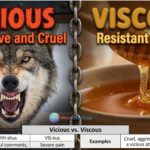
Vicious and viscous look almost identical, but they have very different meanings. Vicious describes something cruel, violent, aggressive, or harmful. Viscous describes a substance that resists flowing easily. For example, an attack can be vicious, while honey can be viscous. Because the spelling and pronunciation are similar, English learners often mix them up. The … [Read more...] about Vicious or Viscous: What’s the Difference?
Blog
Up to Date or Up-to-Date Examples: Easy Rules to Get It Right
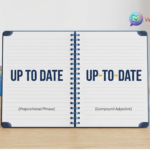
Is it up to date or up-to-date? Both forms are used in English, but the hyphenated form is normally used when the phrase comes directly before a noun. For example: We need up-to-date information. But: The information is up to date. The basic idea is simple. Up-to-date works as a compound modifier before a noun. Up to date is generally written open in other … [Read more...] about Up to Date or Up-to-Date Examples: Easy Rules to Get It Right
Writing or Writting: Which Spelling Is Correct?
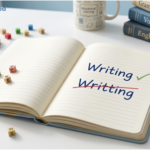
If you’re unsure whether the correct spelling is Writing or Writting, the answer is simple: writing is correct. Writting is a misspelling. The confusion is understandable. English has words such as sitting, running, and stopping, where the final consonant is doubled before -ing. That can make writing look right at first. But write follows a different spelling … [Read more...] about Writing or Writting: Which Spelling Is Correct?
Of Course or Ofcourse: The Correct Way to Write It
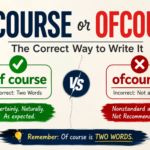
If you have ever been unsure whether to write Of Course or Ofcourse, you are not alone. Both forms look similar, so it is easy to see why people get confused. However, there is a clear answer in standard English: of course is the correct form. It is written as two separate words. Ofcourse is not the standard spelling of this expression. You may still see it in text messages, … [Read more...] about Of Course or Ofcourse: The Correct Way to Write It
Long Term or Long-Term: A Complete Guide to Getting the Hyphen Right

Introduction Both long term and long-term are correct — the right choice depends on how the phrase is functioning in your sentence. The hyphen isn’t optional decoration; it signals grammatical role. When the phrase describes a noun, it becomes long-term (a compound adjective). When it refers to a stretch of time on its own, it stays long term (a noun phrase). You may also … [Read more...] about Long Term or Long-Term: A Complete Guide to Getting the Hyphen Right