
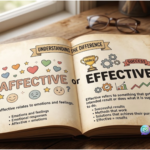
Affective and effective look and sound similar, but they have different meanings. Affective relates to emotions and feelings. Effective refers to something that gets the intended result or does what it is supposed to do. For example, a student's emotional response can be affective, while a study method can be effective if it helps the student learn. There is another … [Read more...] about Affective or Effective? Learn the Difference Easily
Re-sign or Resign? The Easy Way to Get It Right
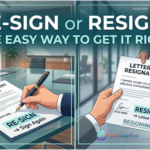
Re-sign and resign look similar, but they mean different things. Compare these two sentences: In the first sentence, the coach is leaving the job. In the second, the team is signing the coach again. The hyphen in re-sign helps show which meaning you intend. This difference matters in work, sports, contracts, and everyday writing. Re-sign Means Sign … [Read more...] about Re-sign or Resign? The Easy Way to Get It Right
Vicious or Viscous: What’s the Difference?

Vicious and viscous look almost identical, but they have very different meanings. Vicious describes something cruel, violent, aggressive, or harmful. Viscous describes a substance that resists flowing easily. For example, an attack can be vicious, while honey can be viscous. Because the spelling and pronunciation are similar, English learners often mix them up. The … [Read more...] about Vicious or Viscous: What’s the Difference?
Plurals of Ox and Fox: Get It Right
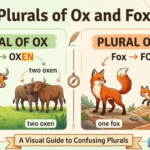
The plural of ox is oxen, while the plural of fox is foxes. These two words look similar because both end in -x, but they do not form their plurals in the same way. For English learners, this difference can be confusing. Why does fox take -es, while ox changes to oxen*? The answer comes down to the history of the two words and the way modern English forms … [Read more...] about Plurals of Ox and Fox: Get It Right
Does the Comma Go Before or After And? The Complete Guide
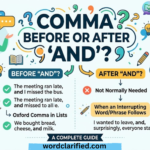
When you write a sentence with “and,” you may wonder where the comma belongs. Should it go before and, after it, or should you leave it out? In most cases, when a comma is needed with and, it goes before the word. This is common when and joins two independent clauses. For example: The meeting ran late, and I missed the last bus. However, a comma is not … [Read more...] about Does the Comma Go Before or After And? The Complete Guide